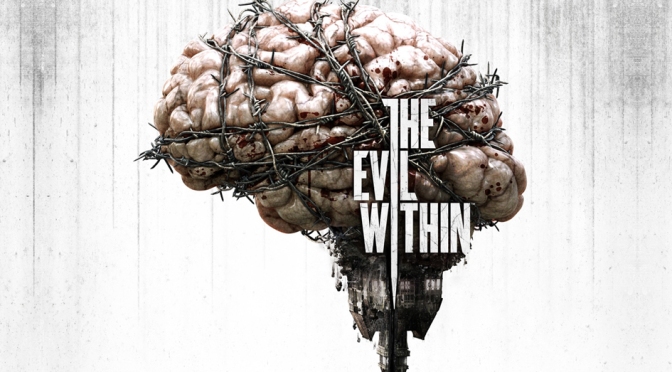
Halloween still scares the living crap out of us. We can’t deal with the abundance of films and video games that feature creepy dolls, undead minions, chainsaw wielding maniacs and flesh eating zombies. Out stomachs are a little uneasy now that we know what will be the scariest game of October 2014 – The Evil Within. The brainchild and video game development genius that is Shinji Mikami has lent his expertise toward the production of this horrifying release. He took some time away from crafting nightmarish creatures and scenarios to answer a few questions. We present to you this exclusive interview with the “father of survival horror” Shinji Mikami.
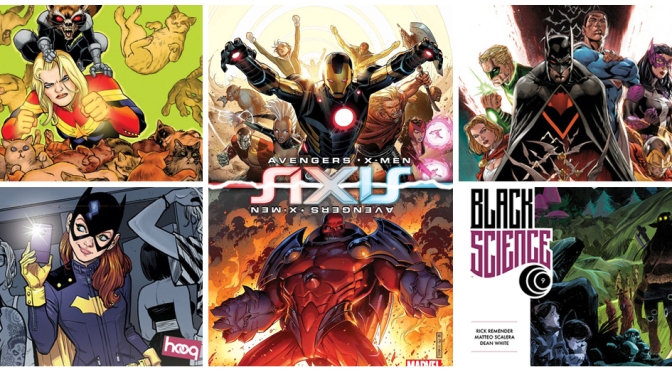
Welcome to the first edition of our weekly comic pull list! I love my weekly trips to the comic shop on Wednesday, but with so much coming out every week it can be a little overwhelming. So I will be sharing my picks of the week, every week, whether it is comics I am following religiously, or checking out for the first time. Whatever your taste, there will be something here for you!
So, we’re three episodes in and thus far – I was hoping for more.
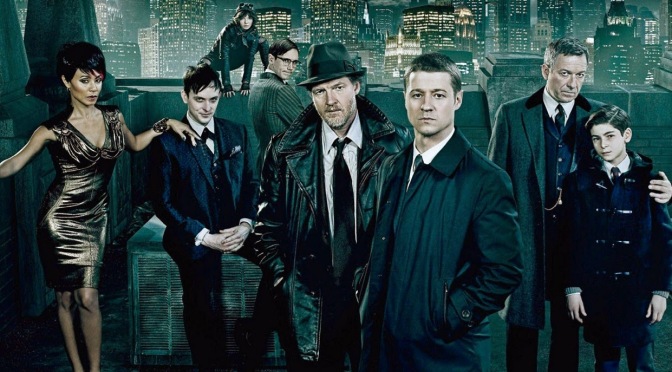
Gotham follows Jim Gordon as he enters the GCPD, and he does so just in time to have a certain famous double-homicide fall into his lap. That event, the murders of Thomas and Martha Wayne, will act as the catalyst for the entire show as we see the city, which was already in trouble, tumble over the edge. This concept excited me, still excites me. The decline of a city to such levels of corruption and violence, that the presence of a masked vigilante becomes not only necessary, but an accepted progression? Jim Gordon as the tragic hero who fights tirelessly for the city that crumbles around him? That sounds excellent. And with that in mind, I had hoped for a show about Gotham City that revolved around a young Jim Gordon, and on occasion featured some familiar characters. However, what we’ve seen so far is a show about the origin of Batman, that takes place in Gotham City and uses Jim Gordon as a means to introduce countless familiar characters. Now that might not sound like a huge difference to you, but to me, it’s enormous.
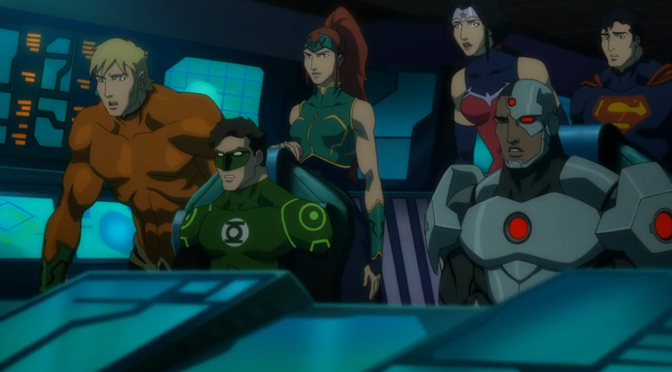
It’s been quite the year for Arthur Curry, or Aquaman to those of you who aren’t familiar. From his speculated to now confirmed inclusion in the upcoming Batman V Superman: Dawn of Justice, to his brief nod in the post credit scene of Justice League: War, the King of the Seven Seas has been notably visible in 2014.
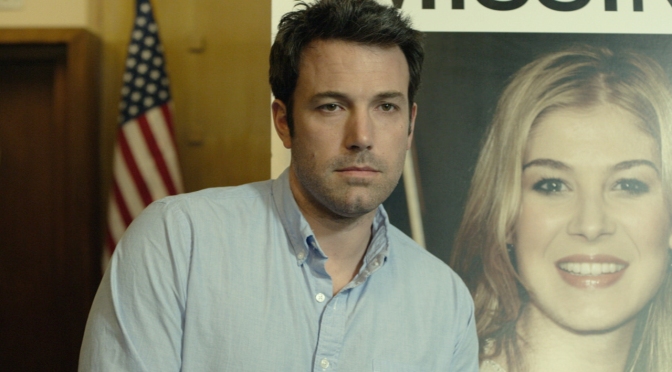
David Fincher can do anything he wants in my opinion. If he wants to do Star Wars, let him do Star Wars. If he wants to tackle a full season of HBO television like True Detective, by all means do it. Fincher has this beautiful, yet blunt ability to dig deeper into a story and draw out every wonderful or excruciating detail and throw a spotlight on it. Okay, maybe more excruciating than anything, but his ability to present several angles fleshes out all this stories and makes them memorable at the very least. Gone Girl is no exception. This movie resonated with me for hours after I left the theater. This dark portrait on a marriage, first impressions and snap judgements in a media dominated society enthralled me for the two hours plus in the theater. While it may not ever hit that final gear in gripping the audience, you will walk out of the theater eager to discuss with your fellow moviegoers.
Less than a year after the release of his previous feature, Labor Day, Jason Reitman returns with Men, Women & Children, yet another take on relationships, albeit, more modern and ambitious. Infusing the perils of technology, Reitman creates an interconnected story featuring parents and teenagers trying to decipher what the Internet has done to our society. The segments range from a couple using the Internet as an escape from their strained marriage, to a high schooler struggling with a fetish that deviates from the common sex culture, to a star athlete whose lost interest in football after his mom runs off and finding comfort in the online world of Guild Wars. Some may laugh it off, or find the struggles of this Texas suburban community to be negligent to greater world problems, but it’s through Reitman’s raw telling of the story that makes Men, Women & Children the most honest film of the modern day. Nothing is sugar coated. Every storyline features people we’ve known, stories we’ve heard, and struggles we’ve felt. Yes, some threads are stronger than others, but the overall product creates an extraordinary film.
The binding of the story relies on an ominous narrator, Emma Thompson, who uses Carl Sagan’s Pale Blue Dot to put a perspective on life. She chimes in throughout, ocassionally giving tidbits into the characters’ thoughts for comedic expense, yet mainly as a reminder of how unimportant we are, how insignificant everyone we know, everyone we love, everyone we’ve heard of, is to the universe. It’s through this thought, that the audience is forced to think what matters most to them. To some characters it’s sex, to others it’s love, fame or just acceptance. Reitman and co-writer Erin Cressida Wilson beautifully maneuver Chad Kultgen’s novel into an emotionally satisfying ensemble piece.
Utilizing mostly handheld camera (even shaky dolly shots) and little pop-up blurbs on the screen to show texting, internet browsing, etc., Reitman draws us into this realized world. Fruitvale Station, Sherlock, and others have used similar techniques, but Reitman fluently integrates the technology to demonstrates how naturally it has become involved in our lives such as having the Google search bar appear above a character browsing for escorts, or in one of the most memorable shots, showing kids walk through school with texting, music, tweeting effects hanging above their heads.
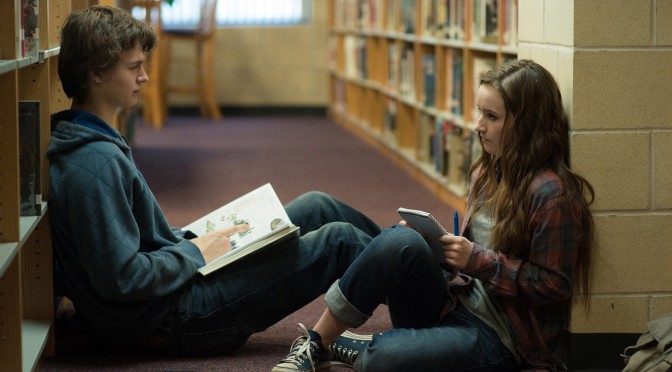
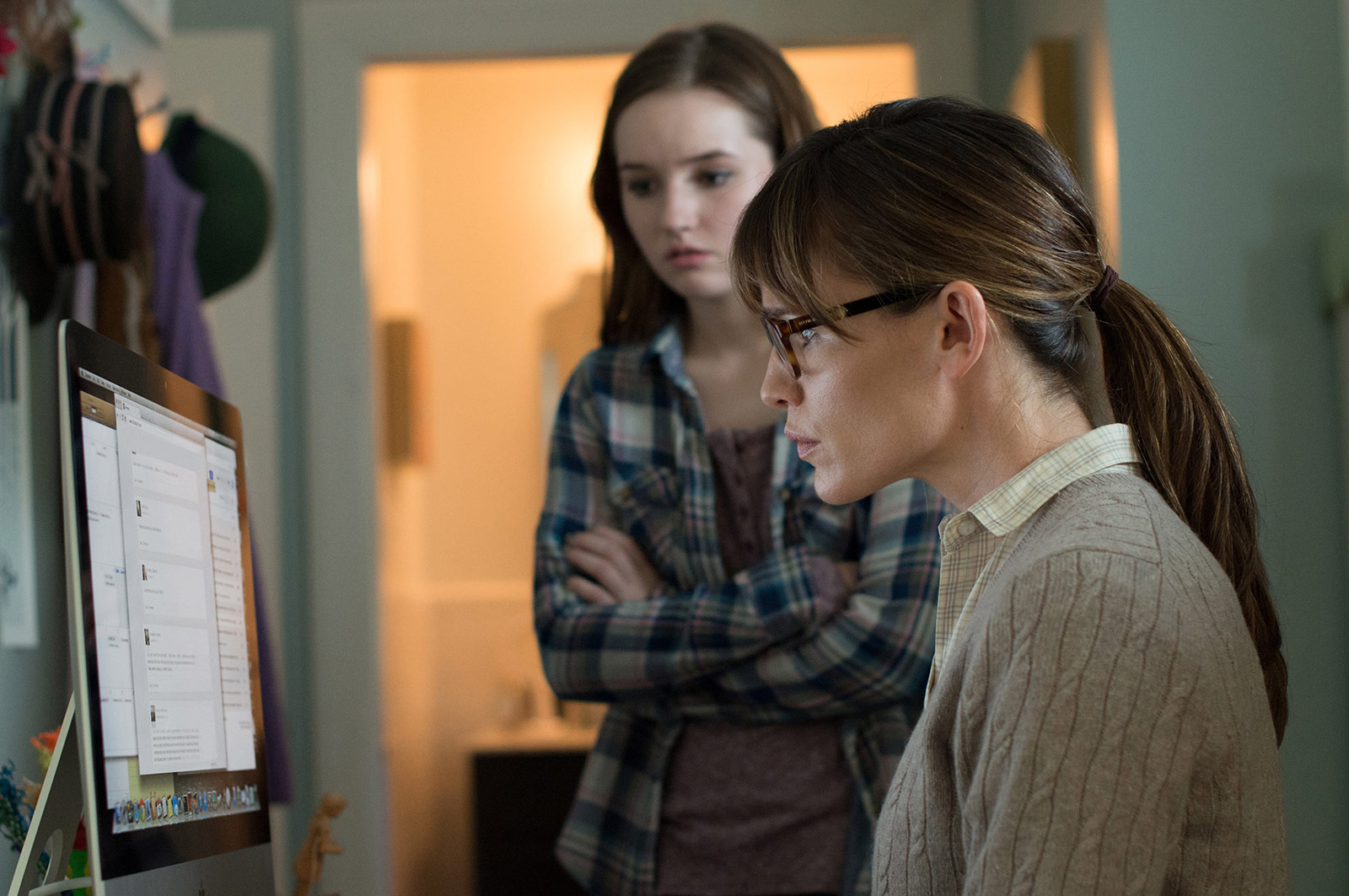
Across the board, performances are good with the high school kids for the most part outshining the parents. The standouts have to be Ansel Elgort, who most know as the love interest in The Fault in Our Stars. Adam Sandler, gives a very subdued performance akin to Punch Drunk Love and proves that despite his recent shit show of films, the guy is capable of being a good actor. Sandler’s son in the film, Travis Tope, is noteworthy, as is Judy Greer, a mom trying to jumpstart her daughter’s modeling career. Jennifer Garner, an overtly protective mother who will go to insane means to track her daughters digital footprints also is a plus.
That all said, the film is not perfect. Some of the teen storylines don’t wrap up as nicely as others, leaving a morally ambiguous finale for the ending montage. Also, the scenes where the story transfers from one character to another when they pass each other is a bit cheesy and too coincidental. There’s also some odd choices made of when Emma Thompson voice comes in that felt like Reitman wanted to keep the comedic tone rather then delve straight for the drama. And oddly, J.K. Simmons is given almost the exact same role he played in Juno. A lot of comparisons have been thrown around to last years film Disconnect, which dealt with similar problems derived from the internet and featured another comedic actor with a beard. The biggest difference, is the plausibility of the students and the situations. Men, Women & Children deals with the desire to stand out and the use of the Internet as an escape, while Disconnect was an overly exaggerated film about the extremes of using the internet. The former allows for connection, the latter allows for parents to panic.
Reitman’s film doesn’t say that using the Internet is bad or that we shouldn’t, it just wants us to realize how it has changed the world and to decide on our own whether that is good or bad. Is it wrong to find solace in others online? To some it may be, for example a character using online chatrooms to encourage her anorexic diet, but for others, like Ansel’s character using Guild Wars, it’s a place to be himself and to feel like he’s constantly working towards something instead of being unimportant to society. That’s the debate at the heart of Men, Women & Children. Is the easy access to our desires online good or bad, and whether these desires should be important or unimportant. The film doesn’t give a clear-cut answer, it simply gives the audience enough to recognize technologies connection to our society.
 Grizzly Bomb